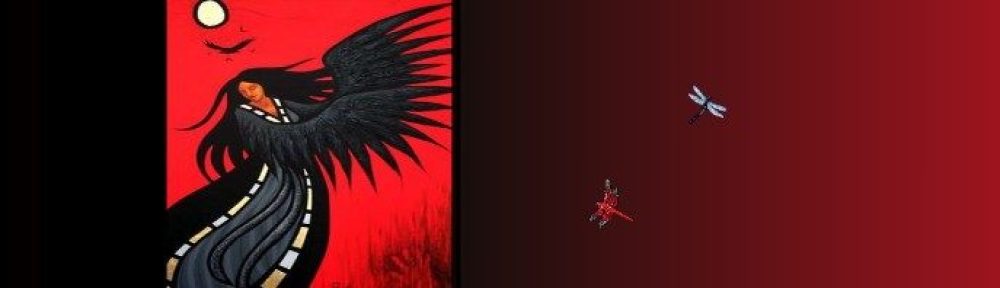
We Didn’t Become Who We Were Supposed To Be

There’s a call-out right now from the Province of Alberta to Indigenous people who were apprehended by Child Family Services (CFS) during the “60’s Scoop” specified as: “a period of time when an unknown number of Indigenous children were taken from their parents and communities by child intervention services and placed with mostly non-Indigenous families.” The time period is the 1950’s to the early 1990s, but let’s be clear, this counts to even today.

I answered the call and submitted replies to four questions on the online form for those unable to attend six meetings set in Alberta from January 1 to March 1, 2018.

They want to hear, (anonymously if preferred) how you & yours were impacted by your removal; what a meaningful [official] apology looks like; how you feel about apologies; and what you hope will come out of an [official] apology.

Who knows what differences will come from this; there’s been so little change in decades of official government reports on the consequences of colonialism. We’ve yet to see appreciable differences in Child Family Services across Canada, nor in any other Indigenous issue of equity.

I know the opportunity to get on record may not change much, but I fervently hope those of us who get to hear each other’s stories will feel enough understanding to fill a bit of that hole in our hearts. I hope that our combined voices will keep rising until no one can conveniently ignore us again.

I’m sharing part of my replies to Alberta and the Canadian Government as a part of those hopes.  I don’t expect my answers will be much different from others, but this is the point. Our stories began and end in the same ways…

My family lost everything in connection to our relatives. We lost who we were supposed to be. We lost any Cree or Michif language we had, we lost contact with all our relations, we lost our sense of selves & in some cases, permanently.

Because we were six kids in my family, we lost contact with each other when we were split into different homes. In the long run, we irretrievably lost our relationships to each other.

In one round of apprehension, five of us were put together in one home, but it was to be a brief arrangement. One day I was told I would be moving within days and over a 24 hour period, I was made to choose which single sister I could take with me. All four of them stared at me and begged me to choose them. I tell people it was then I knew what it felt like to feel your soul crack. I was twelve yrs old.

Abuses were common in some of those homes. It ranged from the psychological, i.e.  being told our mother was a drunken Indian whore or some variation to physical hitting. We were also warned, without explanation, that it was likely we’d never see our own mother again.

There was not a single time in all those years that anyone thought to ask us how we were feeling. There was no one who would explain what was happening or why. We were picked up and forced into the back of a car and simply driven away with the explanation that it was time to go away for a while. Not even the good homes, where the people were decent and lovely, thought to ask.  No one, it seems was aware of the need, never mind the how, to rout and heal the damages of apprehension & abuses already ingrained.

I ran away from my last foster home when I was 14 yrs. I ran to my mother who was even less prepared for me than before. She’d been broken down to survival level so many times by then, she’d retreated into full-blown alcoholism.

Her life as a single mother escaping from abuse with her babies had been turned into a hell of oppressive orders and judgement by and from the government ostensibly ‘helping’ her. They had a lot of orders for how she was to conduct herself, but not how to protect herself.  She was to blame if her abusive ex-husband found her.  She was to blame if the kitchen sink had dishes in it when a social worker dropped by and claimed neglect. She was to blame for not holding it all together while enduring such enormous psychological threat every minute of her life.  Any infraction would cost her the custody of her children and then did.

My mother managed to turn her life around with a strength of herculean effort and success and decades later she still doesn’t have the family relationships she dreams of, craves and aches for. She doesn’t seem to fully understand that her family brokenness is beyond even her own apologies to fix.

Meaningful apologies? We’ve seen apology after apology for the barbaric practices toward the Indigenous for years, but there is at most a small shuffle in government procedures, mainly re-naming current processes.

Meaningful is the government instituting the recommendations made by Indigenous people. It means replacing “foster care” with more in-home family restoration/counselling services.  Fund those programs directly within communities to restore in-home family & relationship skills, cultural understandings and history. Restore what is being stolen for 150 yrs so far. We see the billions spent on the CFS industry across Canada. We know how much can be replaced back into our communities – where it has always belonged.

I hope all the families who’ve been so torn apart and hurt, so damaged – will find a place to earn some peace.  I hope the reparations of a genuine apology and its processes will provide all the means necessary to get to that place of peace. I hope that we all get something that allows us to pass on good health: mentally, emotionally, and physically to our families for now and all the coming generations.

I hope Canada will finally learn of its every dirty detail of governance hidden under the red and white sleeves of pride and keep teaching about all the wrongs of it.

Never do these things again to Indigenous families, or any families.

That is what a meaningful apology looks like.

RL
Sixties Scoop apology engagement. For survivors of the Sixties Scoop to inform a meaningful apology from the government.  Be forewarned, once you submit your thoughts, you will not be able to enter the site again for any amendments.
ps://www.alberta.ca/sixties-scoop-apology-engagement.aspx  – online submissions
RE: Alberta 60s Scoop class action lawsuit, by Koskie Minsky LLP | Barristers & Solicitors or others. This lawsuit applies only to Status FirstNations  & Inuit .
Non-Status First Nations &  Metis can offer their story for the apology

Remember That Thing Called, ‘The Canadian Way’? Yeah, Not So Much

When it comes to the past, the quotation, “History is written by the victors” is supposed to be the bottom-line. But the truth is, history is more often true only until it’s uncovered. Unfortunately, often such revelations induce intense reactions. Especially toward people who now have a magnified voice to speak about their place in that history. We’ve seen plenty of this recently with Indigenous perspectives brought to light far more widely in Canada.

When I was a little girl, I remember how proud I’d feel when tested on Canadian history. I’d swell with pride the most at knowing who our heroes were.

Robyn, who was our first Prime Minister? “John A. MacDonald, ma’am”!

And what did he do for Canada? “He built the railroad, ma’am and he built our great nation”.  Good girl. Oh yes, a proud little brown girl in braids staunchly saluting the man and country.

Then my world shifted, with a decidedly brutish thud. I’d be well into adulthood when I learned who J.A. MacDonald the man, really was and what this first Prime Minister of Canada did to my grandparents for 6 generations and counting.

John A. MacDonald – venerated on Canadian money, statues and plaques across the country was a depraved, racist drunk who did his level Prime Ministerial best to wipe out my grandparents, my heritage, my culture, my status of equal standing even within the Indigenous community, and my God-given inheritance rights of our lands and resources.

That’s some ‘uncovered history’ and I suppose I went through stages of grief following – full disbelief at the absolute betrayal – by MacDonald, my teachers, the entire country’s standings. Although, I have yet to truly get past that anger stage. Not because I haven’t yet processed the often requested, “taking into account the mentalities of those days”, but because most of his policies are still being enforced to this day, by the more than willing.

The number of inequities and prejudices still leveled at the Indigenous in Canada are documented daily – news stories, opinion pieces, every social media platform, and via self-appointed trustees of the Canadian taxpayer, (who completely ignore that the Indigenous majority pay taxes – & that irony).

So, Indigenous history aside for the moment, it’s not very surprising to see what happens when more truth-hammers come down onto mythic Canadians of account. I understand that sense of shock, even for the side that hasn’t suffered the injustices their heroes perpetrated.

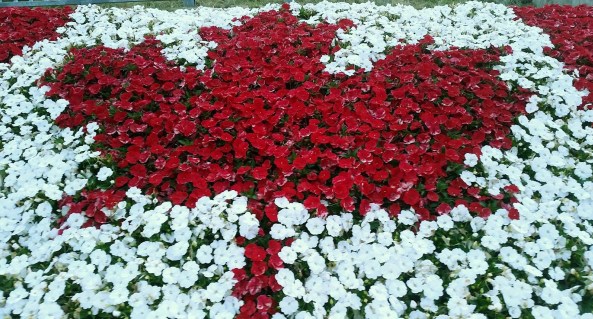
Canada maple leaf flowers

What is surprising, given the monumental (no pun intended) work to promote it is, the lack of that famous ‘Canadian fairness/niceness’. Because not only is there justified, understandable shock, the amount of immediate outright denial and shutdown is stunningly disappointing.

Too often, every excuse to pardon the atrocities and buff the edges of inhumanity are trotted out. Regardless of credible citation provided, every rationalization possible is provoked. Case closed. Nothing to see here, folks.  Oh and, “We’re not racists”!

Although, also often ignored are the denials especially loudly voiced if the research is supplied or written by an Indigenous person. That right there is proof of merely ‘biased opinion’. Only the ‘white science/history’ need speak to history, thank you very much.

When I received that J.A. MacDonald reality check, the ground shifted and my world changed forever. I learned that not only what I’d been taught was a lie – especially the parts that said my ancestors and I were from an empty, useless abyss, but I was to see how much the world around me was still promoting that abysmal record of inaccuracy.

It’s scary as hell and ugly. It’s frustrating and infuriating, but like most pasts of bad behavior – it can be changed for the better. However, it can’t be changed, cured or healed, nor grow into something genuinely good for all, until it is really seen.

It’s time to own up to the fact that Canadian atrocities are real, no matter how poorly that reflects on Canadians. The reflection can’t be clean until we get clear. We can’t hide our heads in the sand and allow professional or neighbourhood deflectors to speak for us anymore.

We can’t be called decent until we behave with decency. We can’t let fears of losing face for not being good people over-ride actually acting in decency. When we know better, we do better. Well, right now we know enough. Take responsibility for the price of the benefits still received from that history.

Opportunities present daily, requiring little effort. It’s as simple as reading the Truth and Reconciliation Report and its 94 calls to action. Act on the ones you can.

Addressing history isn’t about changing it. Homages to Canadian atrocities belong in museums from where we can learn. Let’s place pride in seeing, cleaning and dressing the wounds. Place pride in those who build honourably and for those who overcome atrocities. In honesty; why shouldn’t that be the ‘Canadian way’? Honestly.

RL


Margaret’s Baby

During a year of upheaval, reflection and even amazing rewards, a walk back to beginnings can help to return a sense of balance, to find an equilibrium that helps make life make sense again. I’ve been going back to some significant and poignant moments for me for that purpose. One of those periods was returning home after time spent in child foster care. This story was also published a few years ago, but for anyone who hasn’t seen it, maybe something in this will resonate for you too…

Sometimes old memories float up in need of
a little light…
A soul’s whisper to let it go.

curtains-city-skyline4

I was 14 years old.  My mother and I were living in an apartment on the 14th floor of a basic downtown high-rise.  We were there because that’s where she was when I ran away from the last foster home I’d intended to live in.

I threatened to run away and never be found again if they made me go back to that home.  The Department of Social Services, and my unprepared mother, gave in.

My mother had been struggling with escape from an abusive marriage, alcoholism, and no way to fully support her daughters. No help for my mother who’d already had the threat of losing her children applied to her enough times that she’d pretty much given up by then, and so once again, we were taken. The final round of “foster care” began.

We were six girls, ages two to twelve years.  I was twelve.  They were my sisters, and because I was the oldest, they were also my beloved babies. There was no doubt that having already traversed a very rocky start together, we were a fiercely bonded ‘band of sisters’.

I was quite used to taking care of them, and the house as required, which it seemed was almost always.  So, the demand to relinquish responsibility to the social workers who came to take us away or to the people who were to foster us was incomprehensible.  It was shocking and infuriating and frustrating.

Many nights I’d lie awake planning our escape from that foster home and formulating the many ways I’d find our mom. I usually ended up crying myself to sleep immersed in the despondency of realizing how powerless I really was.

We were all together in that initial home, except the youngest who was instead taken to live with our father – another story for another time.  I was eventually to move to two other homes within a year and a half. Only one sister was allowed to go with me; they gave me one day to choose between the four faces that pleaded to be taken.  Despite everything that we’d already lived through to that point, it was then that I learned that a soul could feel fractured.

In short time, and with little choice, we adapted and carried on as kids are so able. Then two years later, suddenly we were all being taken to visit with our mom at her own new home. The visit went by as quickly as I’d dreaded. When it was time to say goodbye to her, it felt like the beginning of all the bad goodbyes again. I could not return to that pain; the next weekend I bolted for home, for her, for good.

So there I was, on the 14th floor in a small, sparse apartment, a temporary only child, but finally with my own mom.  Life definitely took another turn in my day-to-day. I spent less time with my friends and more with my mother’s.

She had a friend on the 7th floor.  Phyllis was one of those larger than life characters; a hard-drinking party girl, a queen bee who had great pride in being a full-time ‘player’.  She seemed to take my mother under her wing.  She was a louder than life distraction for a young woman bogged down with desperate problems.

Phyllis held court to an allotment of very proud and loud butch lesbians.  They called themselves the girbols (girl boys, hard g).  One of them was Margaret. She was pretty, a large woman, and very quiet. Though she liked to hang out with the crowd and indulged in the same drink and smoke, she alone remained quiet.

I came home from school one day, at the start of spring break, and went down to the gang. There was a brand new baby girl cuddled up in Margaret’s arms.  I hadn’t even realized that she had been pregnant. The baby was so tiny and delicate, and wrapped in a pink blanket.

Spring Break began on a weekend and as on all weekends, it was time to get the girbol party started. I was immediately designated the girl baby’s guardian. I took baby, and all of her required possessions, up to my apartment.

The ‘weekend’ turned into nearly two weeks, during which I had full custody of baby night and day. It’s awesome, as in really awe-inspiring, how easily you fall in love with a child, even as a young girl, and you immediately wish to be everything it takes to nurture them to perfection.

She needed me for everything and I reveled in that.  At night, I would wrap her next to me and listen to her breath and smell the top of her head until I drifted off in true peace. Every minute with her was another moment of reclaimed love. I was once again protector, friend, sister, mother.  For awhile I was me again.

Spring break was over and I’d already missed two days of school, I had to go back.  That morning, I reluctantly took her down to the 7th floor, gave her back to Margaret and left for school.  When I came home, I dropped off my school things and grabbed one of her blankets to collect her. I sniffed her baby smell all the way to Phyllis’s apartment.

When I walked in, I saw Margaret sitting by the window, staring out with the curtains blowing around her. The girbol group was strangely quiet. I asked for the baby and no one said anything.  I went to Margaret and asked. “Where’s the baby”?  She wouldn’t answer, and then I saw her tears.  I was instantly alarmed, even afraid that the baby had gone out the window.

“Where’s the baby Margaret”?  I was ready to cry, but not sure why.

“They took her”, she said softly.

“Who took her”?

“Social Services.  I phoned them today and they came to take her away”.

I know I asked her why, maybe a few times, but I don’t recall an answer.  I doubt she gave one.

I turned from Margaret and I looked at everyone else.  No one would look back at me; they kept their eyes on the floor or each other.  I turned to Margaret again and watched her silently cry for a while.  I walked to the door and quietly closed it behind me.

It was the last day I saw Margaret, or our baby.  I went to sleep that night holding that baby blanket. I wanted to cry, but I couldn’t.  Somehow, I knew in my heart then, that no matter how much I dreamed, I was never going to get my family, my  ‘band of sisters’, back in the same way again.

And, we didn’t, not ever in the same way again.

RL

Originally posted on, with original comments 

Cherokee Nation Triples in One Week, & Don’t Call Me a Redskin

We should be impressed with how many people are well versed in Native American culture and history.  It’s been amazing and enlightening to see all kinds of average citizens report and comment so expertly on First Nations and Aboriginal issues lately.  Of course, this post isn’t really about how much is known about Native Americans as much as how deplorably inadequate our education about the culture(s) still is.

The story that has caused all the questionable commentary was the news the U.S. Patent Office revoked the name trademark for football team, the Washington Redskins.  The public response has revealed that a number of people feel immersed enough in Native American culture that they can speak for how Native Americans should or do feel about all kinds of issues.  This includes how to react to the use of a term historically known as racist for the sake of sports team logos and names.

I keep reading things like, as a Native, I’m one of the people who doesn’t really care about this, and so why should anyone else.  I most definitely have feelings about this – I feel hurt, angry, and sometimes surges of the humiliation burn I endured at times throughout my life because I am a Native person. The sting of being called a dirty redskin when I was a child is as piercing now as it was then.

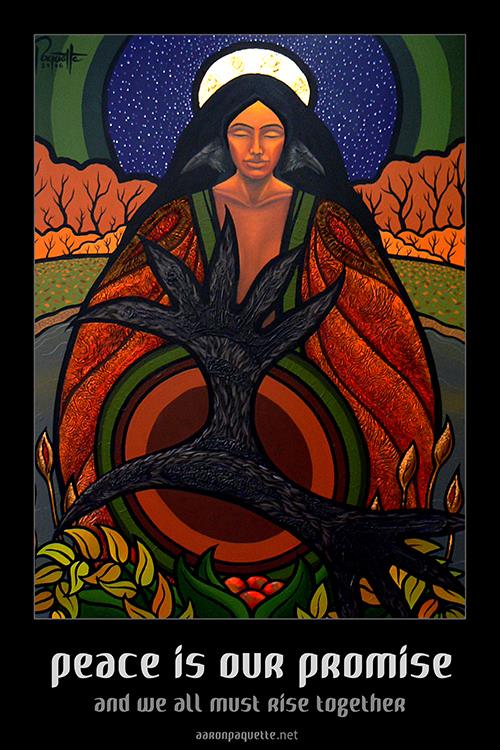
peace is our promiseI’ve read over and over that even if I do care, what I feel is beside the point because there are far more people out there who really matter.  I happen to think it’s the ones who stand against racism and discrimination of any form that matter.  I believe in the ones who say let’s make the world a better place without the cost of that being another human.  I seek those who speak beyond the words that filled so many, too many, of the commentaries like this:

BUT – 90% of the Universe Likes the Name!

“90% of Indians don’t mind the name Redskins.” or sometimes it’s stated as, “90% of Americans like the name”.  These statements refer to the often cited, but academically questioned, National Annenberg Election Survey from 2004. They proudly quote that 90% figure, but that’s 90% of the 768 respondents – 691 people who claimed Native American ancestry, not 90% of all Native Americans. That’s part of why people take exception to this poll.  It also took almost a year to find those 768 respondents, which begs the question, which neighbourhoods were they looking in?

If you want to get technical, according to U.S. Census records for 2004, there were approximately 3,000,000 Native Americans in the U.S. then.  The number needed to statistically represent 90% of Natives (with a 3% +/- error margin) would’ve had to have been at least 1,100 people  – preferably Native Americans who live within the culture, or are well-versed in it.

There is a constantly ignored October 2013 SurveyUSA poll that showed 59% of 500 non-Native American Washington DC residents thought the name was offensive.  79% of them didn’t think changing the name would make them think less of the team.

There was something else I noticed in the comments and that was how many Native American relatives we all have. If the number of self-identified part-Native Americans claiming not to have a problem with the name is true, then Native Americans must really represent close to a third of the overall U.S. population. For sure the Cherokee nation’s population has got to have tripled in the last week.

There is tremendous debate as to the truth of the word’s offensiveness.  This is where the vast in-depth knowledge of Native American history appears most in the comments.  The origin of the word is debated to the nth degree with disagreement about the word being born of racism.  Therefore, no racist beginning, no problem.

Origin is not the point

 noun: etymology

  1. the study of the origin of words and the way in which their meanings have changed throughout history.   The origin of a word and the historical development of its meaning.

plural noun: etymologies

A paper by Ives Goddard is often cited as incontrovertible proof that the word did not begin as a slur because he cites English and French notes from 17th-19th century journals where they note a chief and some tribal members called themselves red people. First Nations are hundreds of cultures. Some people take exception to those notes because Native historians  – as in the Native peoples themselves – did not record their history in the same way, and most do not historically refer to themselves as red people, let alone redskins.  In any case, the paper does acknowledge the term evolved into a slur, or “obloquy”.

Next, victoriously trotted out are exceptions to the view that most Native Americans are offended and why they shouldn’t be:

  • The first Redskins coach was Native – Disputed as someone who took on a Sioux identity to escape the draft. He also did not name the team.
  • The team was honoring that coach and four Indian players – disputed by redskins owner in a 1933 interview with the Hartford Courant.
  • The Natives have always been proud of these honors – it was Natives who started the trademark revocation in 1992, but overall objections to the name began in the 1950s.
  • Many school teams, even Native ones, call themselves redskins and are damned proud of it.  Most are forgetting when those schools were originally named and by whom, but even so, self identification to claim the name is not the same thing.
  • Oklahoma is Native named and is Choctow for ‘Red People’.  Actually, ˆ“Ogla-ut-homma”, has a different etymology. In the Choctaw language “Homma,” can mean rust, brown, tan, or red. Oklahoma could easily be translated as ‘tan people.’

This may be interesting debate so far, but what isn’t disputed is that the name evolved into a term that evokes centuries of derision, hatefulness, discrimination, and attempted genocide. The term is recorded in historical accounts repeatedly calling for the scalps and genitalia of our ancestors. It’s this part of history that most resonates with the people who are offended by the images and names that dehumanize them to a cartooned existence, i.e. redskins.

Despite that, the reasons given to keep the name run the gamut from derision to the absurd; Natives and white liberals are just whiners and choosing to be victimized. There is simple ignorance of the issue to blaming Obama, who apparently is in need of another distraction.  Some people are very concerned about the expenses this could cost teams if they have to re-tool names or images.  Some people want to cling to tradition, eagerly willing to overlook the horrific and bloody history associated with the term.

Coming to terms with the idea of change can be hard, and for some people, very hard.  Changing something that is eight decades along is even seen as dishonoring “tradition”.  However, if a tradition is based in the highly questionable honor of documentable racism, the time for change is long overdue.

Banning racist slurs may not change everything, but words do have power and standing against words that caused so much damage is the beginning of the end of discriminations, and it says, yes, we do matter.

Besides, there are already cases to show that it can be done without irreparable loss.

  • The University of Utah Redskins became Utah Utes in 1972.
  • The Miami University (of Ohio) Redskins became the RedHawks in 1997.
  • The Southern Nazarene University Redskins became the Crimson Storm in 1998.
  • To date, there were more than 3,000 American Indian mascots and names used in school K-12 athletic programs; more than two-thirds of those have been changed.

Still don’t think any racism underlies the word?  Then why do you suppose that in every single one of those comments – all those stridently opposed to change and steadfastly insistent that the term redskins is really an honor – why did none of them refer to Native Americans as redskins? Not a single one.

RL

Some may have noticed I didn’t capitalize the term in some areas. I did that in order to reflect how that term changes tone even with a simple adjustment of a letter.  I doubt the irony of that was missed by even the most ardent slur defender.

Updated July 7, 2014 Washington Redskins PR Hire is a good idea for Native Americans:   2006 Ben Tribbett Proves Washington Team Name Is Slur, 2014 Ben Tribbett Paid To Defend It

Updated June 29, 2014 to include the Oklahoma reference increasingly cited as self-description for entire Native American nations. With thanks for the information provided by Paula Starr,  Executive Director at Southern California Indian Center.

Our Home and Native Braves

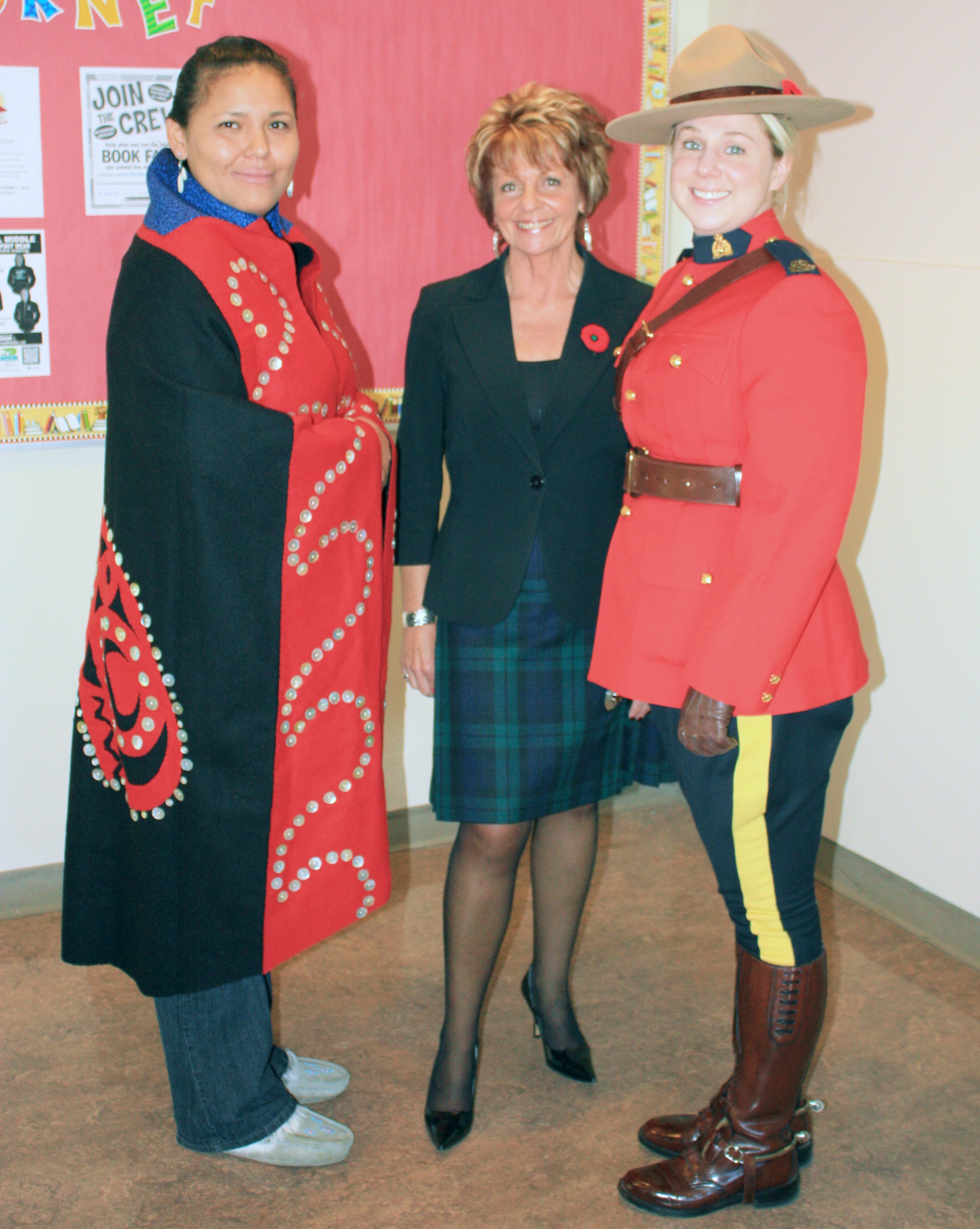
Andrea Hotomanie, Principal, Glenda Speight, Constable Erin McAvoy

Andrea Hotomanie, Principal, Glenda Speight, Constable Erin McAvoy

As Remembrance Day approaches, I am reminded of how profoundly I was moved by the Remembrance Day assembly at my son’s school last year. I found it particularly poignant for two reasons.

What I found initially striking was that the ceremony was presided over by all women, something I’d never seen before.  They were school Principal, Glenda Speight, RCMP Constable Erin McAvoy, impressive in her Red Serge, and Andrea Hotomanie, the district Aboriginal Support Worker.

Andrea Hotomanie was the second reason of note.  She stood up in recognition of the First Nations who serve and have served in the Canadian Military. She wore a magnificent button blanket around her shoulders.  It was the first time I had seen this kind of inclusion at any school remembrance assembly.  It brought me to tears.

It moved me so deeply because it was the first time I felt my grandfather and uncles included in these remembrances in a way that they hadn’t before.  It brought them, Cree warriors from Northern Alberta, faded from history for so many decades, up to the front too.  I felt they were being honored for the first time as servicemen and not as guests in the back of my mind, while all the other heroes were noted up on the screens and in the speeches. Between Andrea’s presence and my son nearby, this acknowledgement brought it all fully home to my heart.

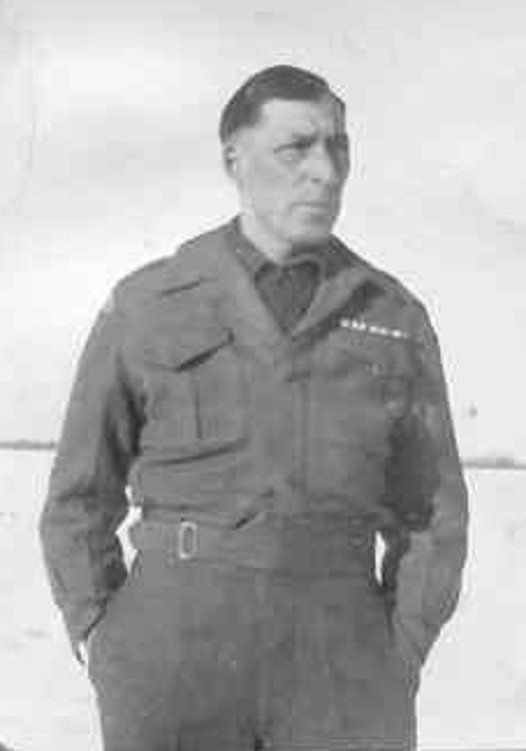
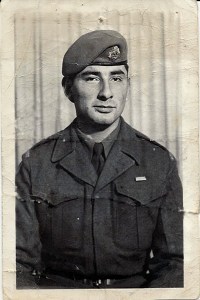
All those many years ago, there was never any doubt that at least three of my uncles would join the military from the time that, as young boys, they stared admiringly at the one photo of my grandfather in his uniform until they were all signed up and fitted into their own.

photo compilation by Robyn LawsonAlong with pride of nation and reverence for the uniform, there was another underlying and stirring reason to join up. Uncle Philip finally expressed it after I asked him why he always declared that his favorite job was being in the Canadian forces.  He said, “Respect”.  While he wore that uniform, it was the first time in his life that he was treated with honest to God respect, and it didn’t matter where he was in the world.  It was his greatest time of honor and pride.  I can’t say so for my grandfather or the other uncles, but I suspect they felt much the same.

Their presence at the Remembrance Day assembly that day was palpable to me, and I have no doubt that they were all there in full uniform.

There is a lot of history about Indigenous participation in the military and the details are available more than ever.  I would encourage anyone to look up that history sometime for some very interesting and enlightening reading.

For now, I would just like to say thank you to my family for their courage.  We will always be proud.  We will always remember.

In remembrance of:

Private John Joseph Baptiste Gray – WW1

Private John Joseph Baptiste Gray – WW1

Private Frank Joseph Gray – WW2

Private Frank Joseph Gray – WW2

Philip Gray Military Photo

Private Philip Sanford Gray – Korea

Private Larry Alexander Gray – Canadian post, Quebec

Private Larry Alexander Gray – Canadian post, Quebec

To an old friend serving in Afghanistan, Deputy Chief of Staff, John Valtonen, as always, thank you, and stay safe.

RL

readers digest logoOur Home and Native Braves was published October 30, 2013 on the Reader’s Digest community website:  http://www.readersdigest.ca/our-canada/community-blog/our-home-and-native-braves

Recommended link for Native military history:
A Commemorative History of Aboriginal People in the Canadian Military:
http://www.cmp-cpm.forces.gc.ca/dhh-dhp/pub/boo-bro/abo-aut/index-eng.asp