Shameless

I know it doesn’t matter what you do or how you do it, there will always be people who will ridicule you. They’ll talk about you, jeer, dismiss, and even attempt to undermine you. A good number of times, one will endure that from their own family. I’ve encountered all of that and I suppose I could always be a target for that mentality at any time and in any place. That’s just the really shitty side of life. That side comes from people who have yet to really dig deep into their own issues. What I’ve learned about that is, I’m not obligated to stay in that place with them – no matter who they are.

Despite a lifetime of being told it was a fruitless endeavor, there was good reason why I headed back 20 years ago to the community of my childhood. The fact that the community happened to be Indigenous was both inconsequential and utterly life saving.

I’d spent years looking for ways to understand why there was such a messed-up history that wrecked my nuclear family. Yes, it’s wonderful that much of the generation after mine has made great strides in the efforts of home ownership and good jobs, but behind all of that is that big black hole that still trails us. None of that is resolved by a good job, a nice home, an education, nor in running across or from the country. I did all of that first.

That black hole was borne in place of my familial history when I was taught my community, my relatives, my grandmothers and grandfathers were the cause of our life’s woes. Much like they are still said to be the bane of Canada and ‘its purse strings’. Because of that, I was meant to deny my own heritage and I followed through with it, like many in my immediate family still do.

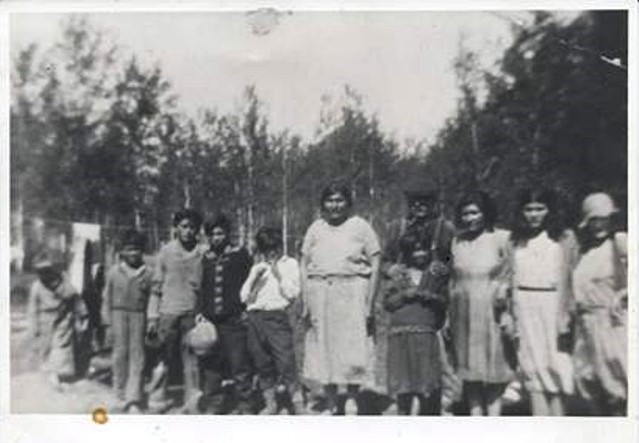
I did my best to be a good Canadian woman who strives to be a success. Except, when your foundation is based in a self-loathing that no one, including myself, seemed to understand, all that hard work can go up in smoke as quickly as it takes to get into a really bad relationship or receive a phone call that informs you are seriously ill. Those were my turning points.

I’d spent years trying to figure out the basis of that self-loathing. Counseling helped me deal with emotional ups and downs and during the moments when it would intensify to unbearable, but in too many instances, it only served to confuse me further. Applying standard accredited counseling services to an Indigenous inter-generational trauma survivor was woefully inadequate and sometimes even more harmful.

An example was a group therapy effort where I was advised the point of my issues was a deep internal desire to be in a sexual relationship with the woman who had driven me to the ‘retreat’. Another was asking me to not only re-create a scene of sexual abuse, but to do it in front of an entire group. I left any support services for quite a while after the work of that eye-crossing frustration. Therapy created in absence of truth, the truth – still mostly unknown to all even today, is just more marginalization of Indigenous peoples.

When those old moments of inexplicable fears arose again, I turned to other methods of coping. Art projects, writing, loads of volunteering or Al-Anon – which was great support, but incomplete. Then I went back to the idea that a super, new job title was the answer after all. Three additional years of corporate abuse dispelled that notion for good.

As it turned out, underneath it all, I did know what I feared most– being seen for who I really was. That was one of the concepts they’d told me about years before, but the thing is, that was wrong too. Because as it is for most, it really all boiled down to being seen for all that had happened to me – and my mother, and her mother – for generations, and for what I’d done in all the processes to cope with that.

So, despite all that running, in the end, I edged my way back to that place I feared most – that black hole. To the source of all the pain and rage and searing sadness. To that place that is my Indigeneity. To that place where apparently, any value as a realized human is only partial for us, according to school, neighbors, Canadian politics, and the punitive digs by a few of my own chosen relationships.

I was never going to know about me until I saw the real me, the whole me, desperately in need of being heard by anyone who could truly know the very real and distinct intricacies of the Indigenous journey in Canada – and that sure as hell wasn’t on the couch of a Freudian-oriented psychiatrist.

It could only be found back among my own, with my own relations where they knew what I was saying with only a third of the words. Where they knew what I was feeling without having to provide every denigrating detail, and far more importantly, they knew everything behind the whys. They carried the key and it was what I needed to finally fill in that hole of debilitation.

I wrote this because despite reams of paper trails to show what this journey entailed and why I am where I am today, I am still in the line of fire for derision. Despite the triumph of being armed with the understanding of my own culture and its incredible value, I am now ridiculed for standing up for it, even from some family.

Canada has claimed dominion over many of us, and I understand the ease of giving in, but I carry centuries worth of family knowledge. That history matters. I understand exactly why the events that occurred happened. I understand them on multiple levels and that’s what killed the shame that was never mine to carry in the first place. I stand up for my mother and my grandmothers because I am them and I was always meant to embrace that.

This is a country that still must answer for my family and so many others who are still swept away in the daily mixed messages of what it means to be Indigenous within it. It’s a horrible shame those messages remain; it’s devastating to know they’re still being internalized at all – on both sides of the equation.

RL

This post was also shared on Medium (dot) com at: https://medium.com/@RobynWins111/shameless-739cf837bce4?source=friends_link&sk=b2b5cdfaa6970c3cef22018f28bafb8b

Feather In Our Hand

I do what I can to help where I can, but the truth is that often, if not most of the time, I really don’t feel seen or heard. I feel as effective as a tiny chirp at the back of the cacophony that earns maybe a slight eyebrow raise from some bored listener on Facebook.

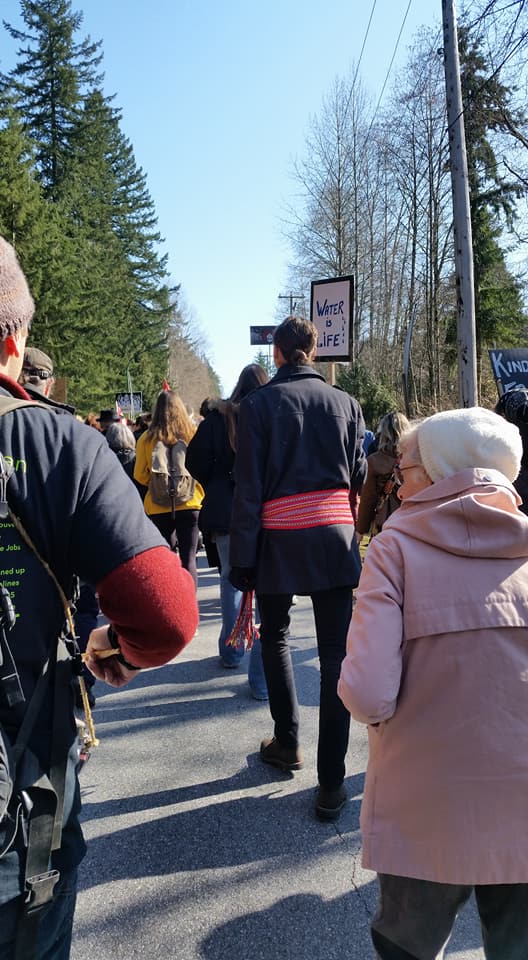
I resist the urge to screech louder. We’re supposed to be cautious about over-sharing or zealotry… Even so, I know at times I push that envelope – so bewildered that so few seem to understand or see what I see, even though what I end up screeching about is very much about their world too – equity and equality, corrupt industry and leadership, preserving clean waters… This is OUR world, damn it.

Realistically, of course I know I’m not really an island and I’m definitely not alone in my concerns nor alone on the front lines of a march or rally. Still, while people outside of those rallies, on social media et al, may seem not to notice, I think some, at least do. But what can really be said in response? How many times will people say, yes, I agree, before moving on?

So where do I or anyone else who desire to influence or create change for the better go from there? I suppose it’s at this point that some of us quit and maybe go look for whatever peace is available in our daily survival struggles. Or maybe we push even harder, hoping more serious agitation will move greater numbers. Or maybe like me, regardless of how despondent, quitting is impossible, (trust me, Cree blood is hot!). So, we continue to push for some semblance of balance in all options.

Having said all that, once in a while something happens out of the blue, maybe even something really quite sweet or even astonishing. Like an old friend and Juno Award winner writes a song and he says your efforts inspired him and all you can think is… holay!

What a beautiful event, this unexpected gift from a friend’s heart. He told me I could sing and record it; it’s mine to do with as I wish. Maybe I will sing and record it. Maybe I’ll just sing it with him some day – and I’d love that, but for now, I’d really love to share it with all the other dreamers who dare to strive. We can’t possibly know all who actually see or hear us, but someone is there and maybe, no matter how many, they’re all we’re meant to connect with. Maybe that really is enough…

A Feather In Our Hand, by Lawrence S. Martin

Kinanaskimotin, my friend.

RL

Mythical Drops of Blood; Pan-Indigenous Nations Don’t Exist

Calling oneself Indigenous or First Nations is equal to calling oneself European or African. Neither of these regions are a single culture. They are a multitude of nations, customs & traditions. So it is for the Indigenous in North America.

It’s often asked in Canada, “what makes someone Metis”? Asked & answered by the Metis Nation in 2002 and received Canadian recognition of it. The real question should be, “what makes one Indigenous”? Who believes a distant ancestor from a generation over 200 – 300 yrs ago or more now qualifies anyone to be recognized as Indigenous? You might be surprised by the number in Canada who think they are – in the hundreds of thousands.

When one says they want to connect with their Indigenous culture, but can’t name the nation they’re from, what then? This is where the Metis Nation is often chosen because of the misinformation it’s a culture that accepts any mixed ancestry. That is not the case, as is being spoken about frequently now by design to educate the public.

The Metis Nation has specific unique languages and customs & traditions of its own. There is a verification process in place for this nation. It is being enforced now because of widespread fraud (intended or not) that takes from the Metis Nation reputation and all opportunities meant for them as an Indigenous people.

So, what about those who got lost in the diaspora caused by Canadian policies? I’m well aware of the separation from Indigenous culture by events like residential schools and the 60’s Scoop. I was one of those kids. I’m also aware that I was lucky to know exactly what my nations are and the names of my grandparents, but I had to search for everything from there to know where I came from, including the customs & traditions of my nations.

Re-connection to one’s culture can only be attained by connecting with cultural centres or relations who can help guide anyone who knows at least their nation. Otherwise we’re really only learning about someone else’s nation and customs, aren’t we?

Although the Cree Nation is well known, I knew I came specifically from the Plains Cree. That was important because there are different Cree nations: Plains, Swampy, Woods, Moose, etc. They all have differences in their languages and customs in the same way any European grouping like the Swedish, Finnish and Norwegian do.

So calling oneself First Nations or Indigenous is not an automatic entry into a grand, pan-Indigenous experience. It certainly looks like that from many people’s promoted experiences of doing just that, but there is dishonesty in that; it does nothing in honouring one’s ancestors or culture.

These efforts only sustain and cement stereotypical ideas as often taught by ‘self-identified/proclaimed Indigenous people’ and onto those Canadian promotional materials using the Plains nations tipis and headdresses to depict an entire culture of cultures. This is rather insulting considering these items were never used in most Indigenous nations.

There are millions of people on this continent from Africa. They have no idea where their families originated from there; a continent of nations. They do not and cannot assume to know which nation is theirs. Some have been very lucky to learn their own historical truths, but most will never know. Unfortunately, this is the case for some people of Indigenous ancestry.

It’s criminal that this sad history persists, but no Indigenous nation is responsible for this horrific stain on Canada’s history. Neither are they obligated to let in just anyone who comes knocking on their door. This includes the Metis Nation. This seems to seriously antagonize a lot of people who want to claim themselves Metis regardless of their history. It may be infuriating and heartbreaking, but that is not the responsibility of the Metis Nation and its people.

So, where do people who don’t know their nations go? I don’t have an answer for that any more than I’d be able to tell African Americans what to do for representation. The only thing that can be done is an ancestral hunt to the best of one’s ability with a heap of good luck thrown in. This unfortunate diaspora is Canada’s doing and what they will do to make it right is the greatest unknown. In all honestly, I doubt it will be much.

RL

What is Metis Again?

Updated September 22, 2018

There’s unfortunate long-held misunderstanding of what being “Metis” means. That confusion has only grown messier in the last few years by increased numbers of various groups looking for recognized Metis identity, if not as entirely new nations altogether.

The misperceptions have lead to outright strife throughout communities, acted out in mild contentious chats to vicious trolling attacks on social media to threatening job losses and lawsuits.

Canada didn’t help this confusion when it formally recognized the western Metis Nation without clearly spelling out that following the steps to ‘self-identification as Metis’ also requires proving that you’re related to this nation. In other words, your relations must be of the known Metis ancestral names on record, language, history & culture from within this western Indigenous community. Thus, I could not put my Cree or other relations on my Metis application.

Canada’s not clearly stating that serves to inspire some to claim their Indigeneity by choosing to be Metis, a very mistaken concept. It is the Metis Nation itself that chooses who to accept in their nation – as does every other nation in the world.

People of no Indigenous ancestry have also been re-inventing their heritage in order to apply themselves, unchecked & un-vetted, to positions meant for the Indigenous in work & arts opportunities, education grants, and governance. Several of these interlopers have been uncovered within the last decade.

From there, groups work by literally re-writing history to usurp harvesting rights from First Nations and to demand retailers provide them rights that even the recognized Metis Nation don’t have – tax free gas & merchandise. Copies of meeting minutes from the “Eastern Metis”, detailed concern mainly for those ‘goodies’ and did not address a single issue plaguing the Indigenous in Canada today.

These groups are prolific, overwhelmingly white, many racist-based including three that merged and changed their name from the “Association for White Rights” to the “Eastern Metis”. They claim well over 20,000 members in Quebec & contest Innu land claims.  In Nova Scotia the self-identified Metis are fighting to claim the harvesting rights of the Mi’kmaq. The Mi’kmaq vehemently oppose those claims because they state, as does the Metis Nation, that there never were historical Metis settlements in Nova Scotia or New Brunswick.

Currently most people, even some indigenous people, believe ‘Metis” simply means a mix of any Indigenous with non-Indigenous ancestry – generally something European.  While the Metis Nation is comprised of some French & British men and the word ‘metis’ is French for mixed, this is not what is meant when it comes to defining the formally recognized Metis Nation.

This nation began forming in the 1600/1700s, solidifying in the early 1800s between a relatively small group of specific and well-documented Indigenous women, generally from the Plains Cree, Saulteaux, Assiniboine, and Dene nations and their French, British/Scot men. Their following generations went onto marry other members of this Metis grouping or their original First Nation tribes. The recognized Metis Nation’s battles alongside their ancestral nations for Indigenous rights, and having been persecuted and killed for doing so, is a well-established record.

The idea that being Metis is the simple work of dividing each generation by another half with white people is incorrect. That ancestry is currently known as mixed or “non-status First Nations” people, known as part whichever original nation(s). It is not, at all, the romanticized idea that the Metis lived one foot in the ‘white world’ and one in the ‘Native world’. The Metis were and are Indigenous.

Just to clarify further, there are also mixed ‘Status” First Nations people. Many of these cases are from families where a First Nations man married a white woman and full status was granted to she and their children. Not so for Indigenous women, who lost all status for herself and her children if she had children with a white man – the original non-status First Nations.

I understand why many want to identify as Metis because of the western Metis Nation federal recognition as ‘Indians’, but wanting it and being it is not the same thing. I do however, strongly believe verifiable non-status First Nations fully deserve the sorely lacking recognition and representation. This is in contrast to growing groups who feel it’s their right to claim Indigeneity on face-value, claiming persecution when asked for bona-fides. They seem to feel they’re above the routine requirement of all Indigenous to provide records of proof to claim status or membership into nation. No nation is obligated to accept anyone.

I’m not entering into the role of declaring who is or isn’t Indigenous. That’s not my fight. My personal expectation is that any individual or group looking for formal Indigenous  recognition have to meet the standards of nationhood that the western Metis Nation did: a distinct language, unique & established customs and traditions and a documented current line to historic Metis communities. If there are other mixed ancestral groups meeting these standards, by all means pursue it, but without denigrating the western Metis Nation for having achieved it. Your fight is with Canada.

Many groups asserting they’re Metis, regardless of the known parameters explain their line to the Metis is based in the claim they were ‘especially’ discriminated against, and so ‘hid out in plain sight’ all this time as a life-saving measure. How do they then square this with their claims of holding ‘known historical land bases’ that tie to them even today?

How does one publicly renounce their heritage for several generations by hiding out and living as and in non-Indigenous communities then come back now to claim their presence in those communities constitutes making those communities now Indigenous?  Qualified historians cannot establish these claims.

I’m very aware of the difficulties some of us have in finding our roots, however most indigenous families were well-documented by Canada for its own nefarious purposes. It’s not as easy to ‘cheat’ one’s way through Indigenous ancestry as one might think. To those who try, I can only say – shame. Shame on you for stealing the only thing any one person undeniably has a right to – their inherent identity.

If one is only seeking status in the hopes of attaining the mythical understandings of Indigenous rights, I’ve little sympathy for that. If you haven’t lived a day as an average Indigenous person in Canada, you are far removed from rights still being ferociously fought for, even as they are actively being reduced in Canada.

For those genuinely feeling the call of their Indigenous grandmothers in their hearts, do seek the home fires of your true nations. Honest peace and celebration is found within the real teachings of our culture(s). Programs dedicated to these efforts prove that.

We would all like easy resolution to our issues, but despite how some want to define Metis, there is more to it than simply throwing any and every nation into the mix.

RL

August 1, 2019: A guide to eastern organizations claiming to be Metis and their histories.

November 1, 2018Self-made métis, by Dr. Darryl Leroux.

Tens of thousands of Canadians have begun calling themselves Métis, Darryl Leroux finds, and now they’re trying to get the courts to agree.

Oct 24, 2018:  ‘Alternative’ Metis Nation Alert; Frauds exposed from the west to the east

Oct 3, 2018: Mi’kmaq of Nova Scotia and Métis sign historic Memorandum of Understanding affirming both Mi’kmaw and Métis nationhood in the face of proliferation of “Acadian-métis” claims. Commit to support each other’s sovereignty into the future. Mi’kmaq & Métis Nation Leaders Come Together to Discuss Nationhood – Kwilmu’kw Maw-klusuaqn – we are seeking consensus

Oct 1, 2018: A 2007 list of known organizations usurping the rights the Indigenous across Canada.

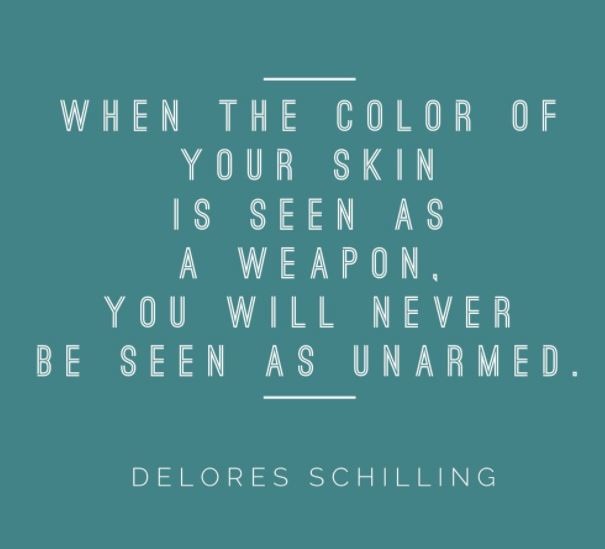
Because He Was Brown

Like most Indigenous paying attention to Canada’s recent handling of two murder cases – 22 yr. old Colten Boushie, shot while he was asleep in a vehicle and Tina Fontaine, 15 yr. old, 72 lbs, killed and thrown into a river – I held both expectations of hope for justice and resignation that the likelihood was slim.

Canada’s record of injustice for the Indigenous speaks for itself in a long line of documented reports. Then, in this era of “Truth & Reconciliation”, Canada lived up to its ability to crush that hope & affirm our worst expectations. Both murderers were fully acquitted, helped by incredible systemic failures and incredulous inept investigation and court service.

We were further leveled with the announcement on March 7th, that the expected call for an appeal in Colten’s case was flatly rejected. The Saskatchewan Attorney General sat in front of news cameras and gave his clipped announcement that their legal system worked as intended; they could find no wrong with the way their system was employed and then he bolted from the table. This was despite weeks of lawyers across Canada detailing the reasons why there was a miscarriage of justice that merited an appeal.

My heart aches for Colten’s mother, for Tina’s family. There’s no level of sympathy I can offer that will do justice to what they deserve. My head aches for all their loved ones struggling to grasp all the realities those verdicts delivered to them.

I can’t work my way through the pain in my heart when I go over in my mind the last week of Tina’s life and the last senseless moments of Colten’s, and that their families will live with this forever.

I struggle with them & I empathize, but even in that I know I’m two layers insulated from their pain. I’m devastated and ashamed in the knowledge that I can take relief too, even within these hideous, tragic events. My fears of losing my boy are eased from their reality because of one huge fact and that is, he looks white.

It’s horrifying to know that this is an actual life-saving truth in Canada. I won’t have to worry about some racist reflex that’ll see my boy shot in the back of the head; then abandoned while the killer sits in his kitchen having a coffee, just waiting for clean-up on aisle: driveway, as did Colten’s murderer.

I can feel this fury, but I won’t have to absorb the darts shot directly into the heart that only their babies have heard on the inside. I won’t have to feel the cuts of gleeful cretins rejoicing in the system that allows one of their own to get away with murder.

…because the victim lacked regard as a valued human being – because he was brown.

I can cry deeply in empathy, but I won’t have the agony of knowing my son would still be with me if only he wasn’t brown, or brown & drinking, or brown & screwing up in the same way white boys have for centuries…

I’ve always worried about my child’s safety. I’ll always pray for his journey to be in ease and peace, but I get to know, in this insidious, despicable way, that the only reason he’ll be that much safer is because his draw in the DNA colour lottery came out white.

I can’t change a thing for Colten’s mom. But I will stand with her, and with every brown mother that has had to feel the pain of that senseless, useless, unnecessary terror that is real for her babies, and used as an excuse for execution by white people.

I will remind any & all the (former) Prime Minister Paul Martins who phoned me to lecture that Canadians are not racist, that they’re being willfully blind. I will never stop letting white people know this is their work to undo. I will never stop fighting for justice & defying inequities. And neither will my son. Neither should you.

Heather is one of the finest people one could ever hope to meet. She doesn’t deserve this fear. None of us do.

RL