Because He Was Brown

Like most Indigenous paying attention to Canada’s recent handling of two murder cases – 22 yr. old Colten Boushie, shot while he was asleep in a vehicle and Tina Fontaine, 15 yr. old, 72 lbs, killed and thrown into a river – I held both expectations of hope for justice and resignation that the likelihood was slim.

Canada’s record of injustice for the Indigenous speaks for itself in a long line of documented reports. Then, in this era of “Truth & Reconciliation”, Canada lived up to its ability to crush that hope & affirm our worst expectations. Both murderers were fully acquitted, helped by incredible systemic failures and incredulous inept investigation and court service.
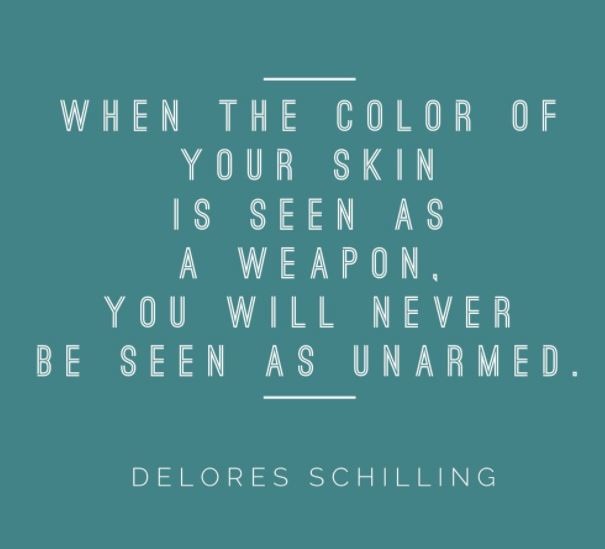
We were further leveled with the announcement on March 7th, that the expected call for an appeal in Colten’s case was flatly rejected. The Saskatchewan Attorney General sat in front of news cameras and gave his clipped announcement that their legal system worked as intended; they could find no wrong with the way their system was employed and then he bolted from the table. This was despite weeks of lawyers across Canada detailing the reasons why there was a miscarriage of justice that merited an appeal.

My heart aches for Colten’s mother, for Tina’s family. There’s no level of sympathy I can offer that will do justice to what they deserve. My head aches for all their loved ones struggling to grasp all the realities those verdicts delivered to them.

I can’t work my way through the pain in my heart when I go over in my mind the last week of Tina’s life and the last senseless moments of Colten’s, and that their families will live with this forever.

I struggle with them & I empathize, but even in that I know I’m two layers insulated from their pain. I’m devastated and ashamed in the knowledge that I can take relief too, even within these hideous, tragic events. My fears of losing my boy are eased from their reality because of one huge fact and that is, he looks white.

It’s horrifying to know that this is an actual life-saving truth in Canada. I won’t have to worry about some racist reflex that’ll see my boy shot in the back of the head; then abandoned while the killer sits in his kitchen having a coffee, just waiting for clean-up on aisle: driveway, as did Colten’s murderer.

I can feel this fury, but I won’t have to absorb the darts shot directly into the heart that only their babies have heard on the inside. I won’t have to feel the cuts of gleeful cretins rejoicing in the system that allows one of their own to get away with murder.

…because the victim lacked regard as a valued human being – because he was brown.

I can cry deeply in empathy, but I won’t have the agony of knowing my son would still be with me if only he wasn’t brown, or brown & drinking, or brown & screwing up in the same way white boys have for centuries…

I’ve always worried about my child’s safety. I’ll always pray for his journey to be in ease and peace, but I get to know, in this insidious, despicable way, that the only reason he’ll be that much safer is because his draw in the DNA colour lottery came out white.

I can’t change a thing for Colten’s mom. But I will stand with her, and with every brown mother that has had to feel the pain of that senseless, useless, unnecessary terror that is real for her babies, and used as an excuse for execution by white people.

I will remind any & all the (former) Prime Minister Paul Martins who phoned me to lecture that Canadians are not racist, that they’re being willfully blind. I will never stop letting white people know this is their work to undo. I will never stop fighting for justice & defying inequities. And neither will my son. Neither should you.

Heather is one of the finest people one could ever hope to meet. She doesn’t deserve this fear. None of us do.

RL

I Looked For You


I wondered and waited for you…

I wondered who would show up, I wondered who would stand.

I wondered if my words or calls for help would bring you to us. I worried my anguished voice would just fall flat.

I looked for you; I searched through the faces to see if there was someone, that one unexpected person to stand with me because they see and despise the injustices too.

I looked for someone to say, I heard you.

I looked for you to hold my hand while I cried about our babies being shot or strangled, then tossed away like litter.

I willed you to come to my side while we spoke about the broken promises and horrors that are inflicted on all my relations because we refuse to die off for the convenience of Canadian business moguls.

I silently begged you to show up for every possible reason I could think of, but mostly… mostly because you wanted to stand for and do, what’s right.

I waited for you to come to me to say you are part of our community and we are part of yours.

I watched for you to speak up and say, this isn’t my Canada. We will change a country that would treat anyone this way because we cannot, we will not, call a country that treats people like this, good enough.

I watched and waited and wondered about you.

…I looked for you…

RL

We Didn’t Become Who We Were Supposed To Be

There’s a call-out right now from the Province of Alberta to Indigenous people who were apprehended by Child Family Services (CFS) during the “60’s Scoop” specified as: “a period of time when an unknown number of Indigenous children were taken from their parents and communities by child intervention services and placed with mostly non-Indigenous families.” The time period is the 1950’s to the early 1990s, but let’s be clear, this counts to even today.

I answered the call and submitted replies to four questions on the online form for those unable to attend six meetings set in Alberta from January 1 to March 1, 2018.

They want to hear, (anonymously if preferred) how you & yours were impacted by your removal; what a meaningful [official] apology looks like; how you feel about apologies; and what you hope will come out of an [official] apology.

Who knows what differences will come from this; there’s been so little change in decades of official government reports on the consequences of colonialism. We’ve yet to see appreciable differences in Child Family Services across Canada, nor in any other Indigenous issue of equity.

I know the opportunity to get on record may not change much, but I fervently hope those of us who get to hear each other’s stories will feel enough understanding to fill a bit of that hole in our hearts. I hope that our combined voices will keep rising until no one can conveniently ignore us again.

I’m sharing part of my replies to Alberta and the Canadian Government as a part of those hopes.  I don’t expect my answers will be much different from others, but this is the point. Our stories began and end in the same ways…

My family lost everything in connection to our relatives. We lost who we were supposed to be. We lost any Cree or Michif language we had, we lost contact with all our relations, we lost our sense of selves & in some cases, permanently.

Because we were six kids in my family, we lost contact with each other when we were split into different homes. In the long run, we irretrievably lost our relationships to each other.

In one round of apprehension, five of us were put together in one home, but it was to be a brief arrangement. One day I was told I would be moving within days and over a 24 hour period, I was made to choose which single sister I could take with me. All four of them stared at me and begged me to choose them. I tell people it was then I knew what it felt like to feel your soul crack. I was twelve yrs old.

Abuses were common in some of those homes. It ranged from the psychological, i.e.  being told our mother was a drunken Indian whore or some variation to physical hitting. We were also warned, without explanation, that it was likely we’d never see our own mother again.

There was not a single time in all those years that anyone thought to ask us how we were feeling. There was no one who would explain what was happening or why. We were picked up and forced into the back of a car and simply driven away with the explanation that it was time to go away for a while. Not even the good homes, where the people were decent and lovely, thought to ask.  No one, it seems was aware of the need, never mind the how, to rout and heal the damages of apprehension & abuses already ingrained.

I ran away from my last foster home when I was 14 yrs. I ran to my mother who was even less prepared for me than before. She’d been broken down to survival level so many times by then, she’d retreated into full-blown alcoholism.

Her life as a single mother escaping from abuse with her babies had been turned into a hell of oppressive orders and judgement by and from the government ostensibly ‘helping’ her. They had a lot of orders for how she was to conduct herself, but not how to protect herself.  She was to blame if her abusive ex-husband found her.  She was to blame if the kitchen sink had dishes in it when a social worker dropped by and claimed neglect. She was to blame for not holding it all together while enduring such enormous psychological threat every minute of her life.  Any infraction would cost her the custody of her children and then did.

My mother managed to turn her life around with a strength of herculean effort and success and decades later she still doesn’t have the family relationships she dreams of, craves and aches for. She doesn’t seem to fully understand that her family brokenness is beyond even her own apologies to fix.

Meaningful apologies? We’ve seen apology after apology for the barbaric practices toward the Indigenous for years, but there is at most a small shuffle in government procedures, mainly re-naming current processes.

Meaningful is the government instituting the recommendations made by Indigenous people. It means replacing “foster care” with more in-home family restoration/counselling services.  Fund those programs directly within communities to restore in-home family & relationship skills, cultural understandings and history. Restore what is being stolen for 150 yrs so far. We see the billions spent on the CFS industry across Canada. We know how much can be replaced back into our communities – where it has always belonged.

I hope all the families who’ve been so torn apart and hurt, so damaged – will find a place to earn some peace.  I hope the reparations of a genuine apology and its processes will provide all the means necessary to get to that place of peace. I hope that we all get something that allows us to pass on good health: mentally, emotionally, and physically to our families for now and all the coming generations.

I hope Canada will finally learn of its every dirty detail of governance hidden under the red and white sleeves of pride and keep teaching about all the wrongs of it.

Never do these things again to Indigenous families, or any families.

That is what a meaningful apology looks like.

RL

Sixties Scoop apology engagement. For survivors of the Sixties Scoop to inform a meaningful apology from the government.  Be forewarned, once you submit your thoughts, you will not be able to enter the site again for any amendments.
ps://www.alberta.ca/sixties-scoop-apology-engagement.aspx  – online submissions
RE: Alberta 60s Scoop class action lawsuit, by Koskie Minsky LLP | Barristers & Solicitors or others. This lawsuit applies only to Status FirstNations  & Inuit .
Non-Status First Nations &  Metis can offer their story for the apology

Clean Houses & Terror

Last week I had the honour (& brief stomach churning fear) of hosting IndigenousXca on Twitter. As the forum notes: it’s a rotating Twitter account presented by a different Indigenous Host each week. Their hosts have included actors, activists, authors, academics, politicians, teachers, doctors, students, and one Pipisiw – me.

This forum was started in Australia in 2012 and in Canada in 2014 as a platform for Indigenous people to share their knowledge, opinions and experiences with a wide audience which is now a following of several thousand.

As I was getting my feet wet with a few opening tweets, one of the administrators posted a point about clean houses. What about ‘em?  Well, let me share my tweets on how a clean house affected my family. No hyperbole, no “other mitigating circumstances”. …

I saw @apihtawikosisan (Chelsea Vowel) post about fears for Indigenous people around a clean house. What that means, as she pointed out, is a clean enough house. As in clean enough to not have your kids taken away. Her post tightened my belly…

It took me back to those moments when I was a child & the air all around us got thick & tight, while my mother would fly around the house with sweat falling off her face from a mix of the physical labour of madly cleaning & terror.

Even as little kids, my sisters & I would instinctively jump to help because we knew this kind of cleaning meant a social worker was coming. We didn’t even know what the consequences of not having “a clean house” really meant, but we knew what it felt like. Breathing was hard.

The government had a power over my mother that terrified her, until it broke her & then we learned “or else” meant we were going to be taken away.

My mother had already lived enough in terror, my father was a broken man & he alone put her through enough by then. She got away from him and what she needed was help – not constant judgement, especially for pittances that kept her on another tight leash.

I remember she was often told she was not to drink. She was not to have any contact with my dad, no men at all, they said, & she needed to keep a clean house. Or else.

Today, I wonder what might have been had any of us been offered a place for our fears then. If my mom had been offered support for coping and maybe even a pat on the back for having got her 6 babies away from an abusive situation by herself.

Maybe supportive, restorative measures weren’t well understood back then, but they are now. All this money poured into employment for provinces in the guise of social work. All the training for foster parents and adoption processes…

All the money given to municipalities in support of those foster parents & restoring municipalities, like the re-opening of schools in New Brunswick because the loads of Indigenous foster kids revived their town to that degree.

copy missing family

Why isn’t this money used for family restorative healing in our communities instead? I feel I answered my own question with my question, because Canada uses the Indigenous not only for land & resources, but constant make-work industries that still terrify mothers (& fathers) to this day.

I hadn’t thought about these particular experiences for years and my visceral reaction to reading Chelsea’s words was very unexpected. What’s still infuriating is that these Indigenous truths are still happening to many families even as I type these words. The stories are noted on Twitter, social media and news media daily.

Yes, it’s all real, and most Canadians remain blissfully unaware of such threats. They can’t even begin to fathom that the dishes sitting in their sink and the dirt on their floor could be enough cause to lose their babies, and in some cases, for good.

Most can’t grasp the depth of Indian Act-induced poverty, and the effects of life under constant judgement and duress and the numerous consequences; the falls into addictions, the escalating abuses in homes, the needs for mental healthcare and on and on and on.

A messy house still terrifies my 75 yr. old aunt. She became OCD about it to this day. My 75 yr. old mom has learned to relax about it – a little, finally.  Me?  Years of counseling to work out those terrors and I’m now a certified horrible housekeeper – and I don’t give a damn. Of course, my child is now 16; we are reasonably safe.

RL

Remember That Thing Called, ‘The Canadian Way’? Yeah, Not So Much

When it comes to the past, the quotation, “History is written by the victors” is supposed to be the bottom-line. But the truth is, history is more often true only until it’s uncovered. Unfortunately, often such revelations induce intense reactions. Especially toward people who now have a magnified voice to speak about their place in that history. We’ve seen plenty of this recently with Indigenous perspectives brought to light far more widely in Canada.

When I was a little girl, I remember how proud I’d feel when tested on Canadian history. I’d swell with pride the most at knowing who our heroes were.

Robyn, who was our first Prime Minister? “John A. MacDonald, ma’am”!

And what did he do for Canada? “He built the railroad, ma’am and he built our great nation”.  Good girl. Oh yes, a proud little brown girl in braids staunchly saluting the man and country.

Then my world shifted, with a decidedly brutish thud. I’d be well into adulthood when I learned who J.A. MacDonald the man, really was and what this first Prime Minister of Canada did to my grandparents for 6 generations and counting.

John A. MacDonald – venerated on Canadian money, statues and plaques across the country was a depraved, racist drunk who did his level Prime Ministerial best to wipe out my grandparents, my heritage, my culture, my status of equal standing even within the Indigenous community, and my God-given inheritance rights of our lands and resources.

That’s some ‘uncovered history’ and I suppose I went through stages of grief following – full disbelief at the absolute betrayal – by MacDonald, my teachers, the entire country’s standings. Although, I have yet to truly get past that anger stage. Not because I haven’t yet processed the often requested, “taking into account the mentalities of those days”, but because most of his policies are still being enforced to this day, by the more than willing.

The number of inequities and prejudices still leveled at the Indigenous in Canada are documented daily – news stories, opinion pieces, every social media platform, and via self-appointed trustees of the Canadian taxpayer, (who completely ignore that the Indigenous majority pay taxes – & that irony).

So, Indigenous history aside for the moment, it’s not very surprising to see what happens when more truth-hammers come down onto mythic Canadians of account. I understand that sense of shock, even for the side that hasn’t suffered the injustices their heroes perpetrated.

Canada maple leaf flowers

What is surprising, given the monumental (no pun intended) work to promote it is, the lack of that famous ‘Canadian fairness/niceness’. Because not only is there justified, understandable shock, the amount of immediate outright denial and shutdown is stunningly disappointing.

Too often, every excuse to pardon the atrocities and buff the edges of inhumanity are trotted out. Regardless of credible citation provided, every rationalization possible is provoked. Case closed. Nothing to see here, folks.  Oh and, “We’re not racists”!

Although, also often ignored are the denials especially loudly voiced if the research is supplied or written by an Indigenous person. That right there is proof of merely ‘biased opinion’. Only the ‘white science/history’ need speak to history, thank you very much.

When I received that J.A. MacDonald reality check, the ground shifted and my world changed forever. I learned that not only what I’d been taught was a lie – especially the parts that said my ancestors and I were from an empty, useless abyss, but I was to see how much the world around me was still promoting that abysmal record of inaccuracy.

It’s scary as hell and ugly. It’s frustrating and infuriating, but like most pasts of bad behavior – it can be changed for the better. However, it can’t be changed, cured or healed, nor grow into something genuinely good for all, until it is really seen.

It’s time to own up to the fact that Canadian atrocities are real, no matter how poorly that reflects on Canadians. The reflection can’t be clean until we get clear. We can’t hide our heads in the sand and allow professional or neighbourhood deflectors to speak for us anymore.

We can’t be called decent until we behave with decency. We can’t let fears of losing face for not being good people over-ride actually acting in decency. When we know better, we do better. Well, right now we know enough. Take responsibility for the price of the benefits still received from that history.

Opportunities present daily, requiring little effort. It’s as simple as reading the Truth and Reconciliation Report and its 94 calls to action. Act on the ones you can.

Addressing history isn’t about changing it. Homages to Canadian atrocities belong in museums from where we can learn. Let’s place pride in seeing, cleaning and dressing the wounds. Place pride in those who build honourably and for those who overcome atrocities. In honesty; why shouldn’t that be the ‘Canadian way’? Honestly.

RL