Indigenous Funds Are Not ‘Federal Funds’ – A Quick Educational Reality Check

There are a host of historical reasons the Indigenous remain at arm’s length in relationship to Canada. The stories shared daily about the inequities are solidly documented. One of the most offensive statements the Indigenous hear repeatedly is, “the Indigenous are financed with ‘federal funds'”.

Those funds have always belonged to the Indigenous; they are not Canadian largesse. Treaties were begun in the 1700s & the 1763 Royal Proclamation acknowledged the land and resources meant for the Indigenous, along with the order to leave us ‘unmolested’.

It’s not a conspiracy theory when we say it’s critical that an audit needs to be done on the federal ministry, Crown-Indigenous Relations and Northern Affairs (CIRNA/INAC). There are decades of explanation owed to the Indigenous nations. No one seems to know a full and detailed account of the funding set aside for the Indigenous since the original trust funds were set up in the east. CIRNA/INAC – which is so closely tied to the resources extraction industry that from 1936-1950 the Ministry of Mines and Resources ran the lives of the Indigenous. Even, and perhaps more oddly, the Department of Citizenship and Immigration had a crack at that, (1950-1965)

It explains a lot in many respects, but especially in the current sense of ownership and entitlement of the resource extractions industries. They’ve had the inside track on everything regarding the Indigenous since the beginning of Canada & we should all be very suspicious about how that dept. has been run – particularly against the Indigenous.

We also know Canada has used the Indigenous funds for its own economic stimulus efforts and infrastructure such as ‘loans’ – never repaid to Six Nations to build Upper Canada College, McMaster University, Osgoode Law School, and McGill University.

These details have been coming to light more and more and it’s important not only for Canadians to understand what their foundation is built upon, but to reverse the decades of harm caused by the caustic denigration built into the Canadian education on the history of the Indigenous. These views remain taught today, particularly by various right-wing policy influences like the insidious Fraser Institute and its asinine teachings and public announcements, still readily accepted by much of the Canadian public.

There are reasons why over 50% of First Nations children remain living in poverty; why a basic right like clean water is denied in several Indigenous communities; why nations refuse to grant permission to resource extraction corporations intent on building through them, and rounds of further issues too numerous to cite in one essay. These issues were begun and have been maintained only by Canadian policy.

These details continue to come to light and they must. We will not stop turning these rocks over. We simply can’t; there is no healing without truth. There is no reconciliation without acknowledgement of all, followed by the necessary reparations. Ignorance has cost far too much, on both sides of the treaties.

RL

https://www.aadnc-aandc.gc.ca/…/1370355181092/1370355203645…
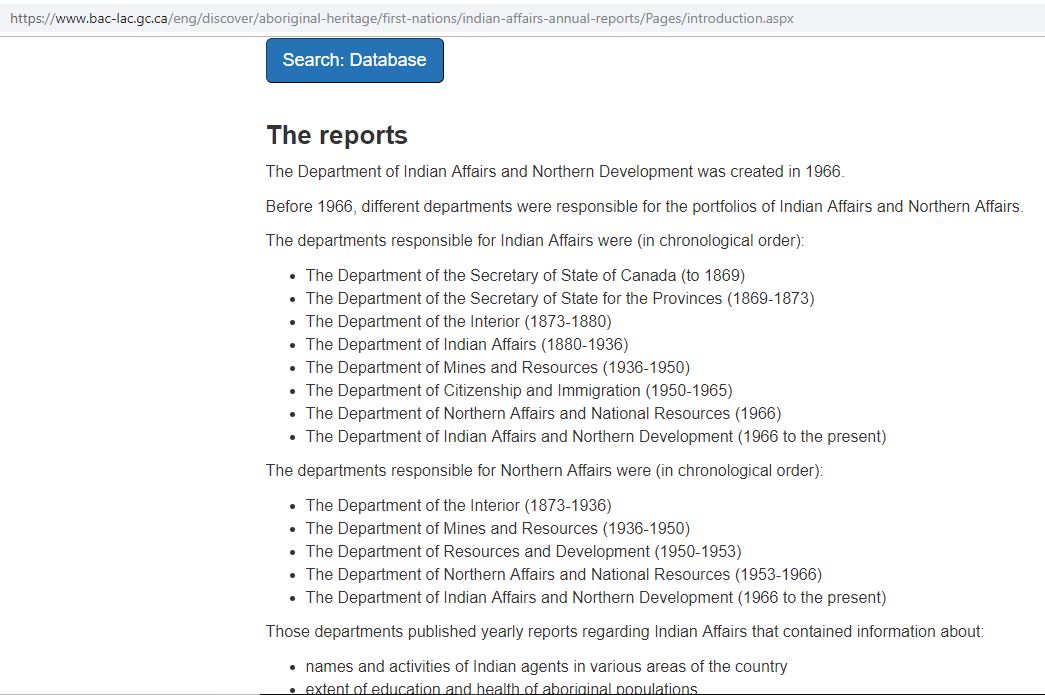
https://www.bac-lac.gc.ca/…/disc…/aboriginal-heritage/first-nations/indian-affairs-annual-reports/Pages/introduction.aspx#b

What is the “Indigenous Rights Framework” and Why Do All Indigenous People Need To Know It?

This is an issue so big, I’d consider it criminal if we didn’t do our best to make sure all our relations are aware of it. I don’t know how many people truly understand what Trudeau’s “Indigenous Rights Framework” is. I know we’ve all heard the name and a lot of big words about it, but what does it look like in its bottom line?

This issue is what previous Indigenous leadership had been fighting against for decades. There are so many Chiefs signing onto this for their people now and I don’t understand how they can do this if they honestly understand what that paper means for all of their generations to follow.

The “Framework” created by Canada without Indigenous input, offers a lot of money today while throwing out those big words about ‘self-determination’ and ‘self-generating revenue’ for tomorrow. They intend to do this by privatizing reserves. Reserves are community property, as was once all of Canada, including what’s now called “Crown lands”. That new revenue is called ‘taxes’.

That means the people who live on reserves would now have to pay taxes to their bands to keep their houses. If they can’t pay the taxes, the band can then sell the houses to anyone who has the money to buy it. Anyone. This is how Canadian developers will get the last of Indigenous lands.

This is how Canada finally gets rid of its “Indian problem” and breaks the original treaties for good. This is the ‘final solution by paper’. We will no longer have our world-recognized nation to nation rights for good. Every reserve would then be less than a provincial municipality. Something many Canadians advocate for, despite the facts of history and it being against the principles of the United Nations Declaration on the Rights of Indigenous Peoples (UNDRIP).

That’s a good enough reason every Chief and Council should question why they’re signing onto this, because they are throwing away every tie we have to these lands. Our own teachings tell us we are inextricably tied to our lands. This is why the ceding terminology Canada claimed was in the treaties makes no sense whatsoever. Our ancestors would never untie who we are from our lands. The Supreme Court of Canada has upheld this knowledge.

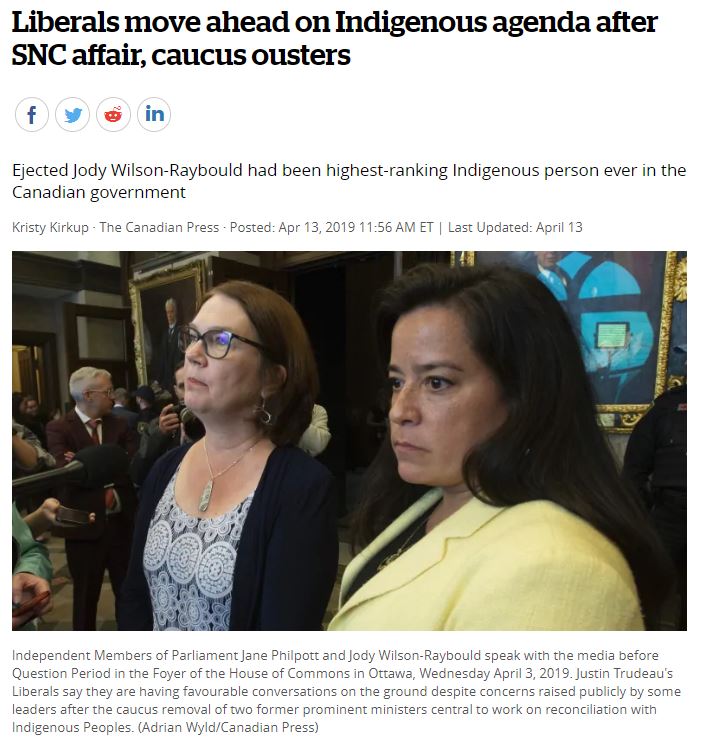
Some people are saying this is part of the reason Jody Wilson-Raybould, a We Wai Kai Nation citizen, was moved from her role as Attorney General for Canada, because she was fighting this Framework’s details. I don’t know if this is true, but a lot of our Indigenous lawyers & scholars are speaking against this Framework because of what it does.

Canada is trying to get away with not paying the huge debt it owes us. Remember the original treaties – they are about sharing not ceding. They are to be honoured, not stripped. Canadians and the Canadian political landscape have to learn what honour is, and we sure don’t need to be begging for Canada’s scraps.

Here’s an example of how that Framework plan works. The people on this reserve get no more funding transfers from the “Indigenous Trust Funds” to suffice home ownership, (as per the treaties & supplied by a portion of resources extraction from Indigenous lands), so now taxes are expected from the residents of reserves. When taxes couldn’t be paid and the band couldn’t ‘generate funding from people who couldn’t pay taxes’, they were all left in a Canadian lurch.

I’m more than aware of how much of a corner First Nations leadership has been backed into by the chronic underfunding that the Canadian Government employs in their carrot & stick approach to bring the Indigenous to heel, but this is the point Canada has been waiting for to take all our legacies. We must stop this. The end of the Indian Act is not a one-sided deal that Canada gets to decide and sort on its own.

A further side note: the great fight currently underway in Canadian election politics will leave this issue mostly ignored, but when people damn the Indigenous for not stumping for their guy in the Liberals or Conservatives, know that both parties implemented this despicable policy. They only dressed its title & taglines differently.

RL

Phoetic February: Missing You

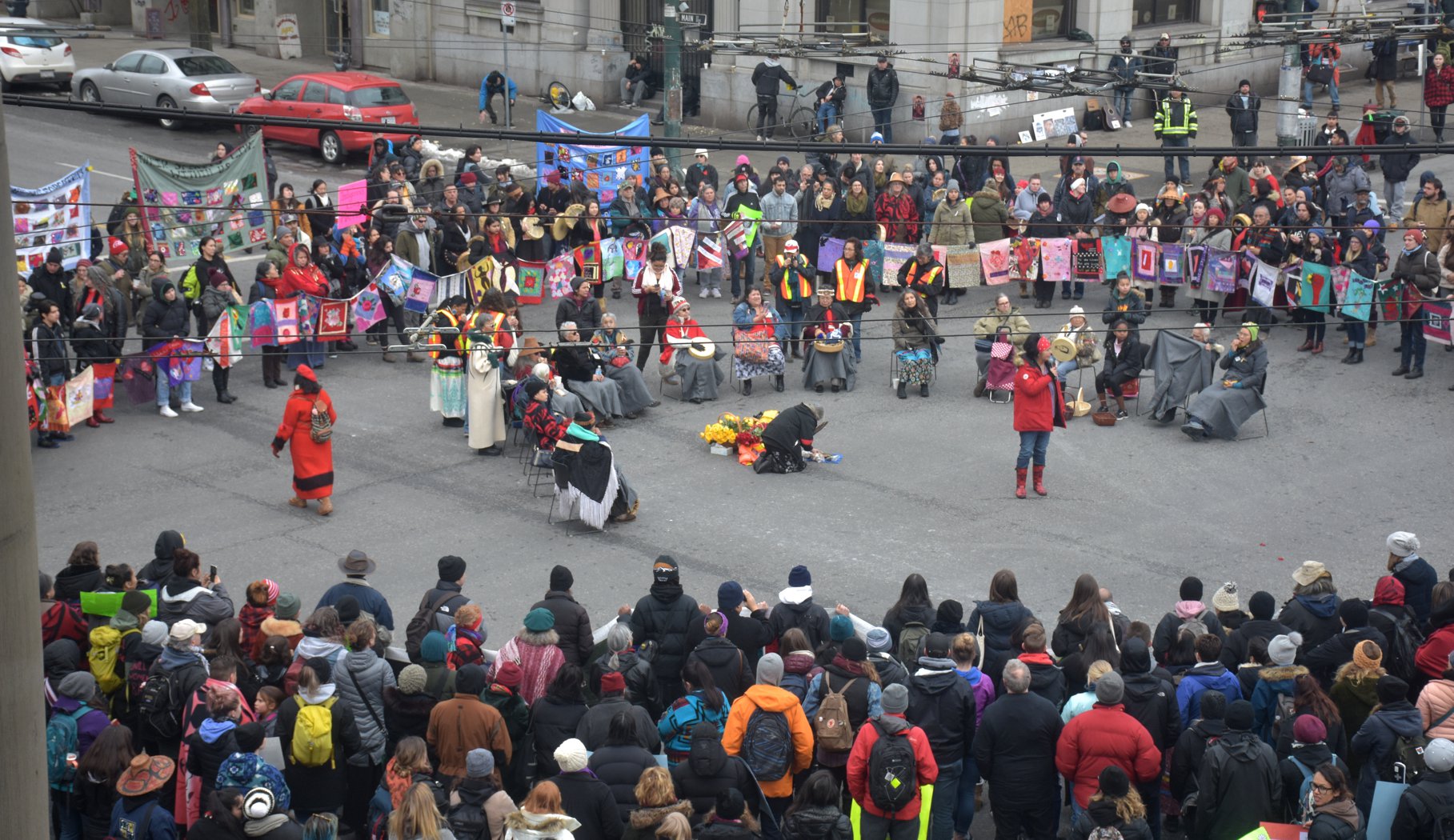
February 14th was changed forever for Indigenous communities 28 years ago. While we still share in acknowledging and celebrating love, we also use the day to recognize and memorialize our  mothers, daughters, sisters, cousins, aunties and grandmothers lost to us inexplicably and/or violently.

We memorialize them in a march through town and city streets to remind all of those still missing and that despite calls for justice and formal inquiries, we have yet to receive any for those murdered. It’s a national disgrace that, as Indigenous women, we remain the most vulnerable demographic in all colonized countries.

A million smiles
Crossed our hearts before goodbyes
Home longingly waits

My cousin, Roberta Marie Ferguson, age 19 yrs, missing since August 24, 1988

RL

Mythical Drops of Blood; Pan-Indigenous Nations Don’t Exist

Calling oneself Indigenous or First Nations is equal to calling oneself European or African. Neither of these regions are a single culture. They are a multitude of nations, customs & traditions. So it is for the Indigenous in North America.

It’s often asked in Canada, “what makes someone Metis”? Asked & answered by the Metis Nation in 2002 and received Canadian recognition of it. The real question should be, “what makes one Indigenous”? Who believes a distant ancestor from a generation over 200 – 300 yrs ago or more now qualifies anyone to be recognized as Indigenous? You might be surprised by the number in Canada who think they are – in the hundreds of thousands.

When one says they want to connect with their Indigenous culture, but can’t name the nation they’re from, what then? This is where the Metis Nation is often chosen because of the misinformation it’s a culture that accepts any mixed ancestry. That is not the case, as is being spoken about frequently now by design to educate the public.

The Metis Nation has specific unique languages and customs & traditions of its own. There is a verification process in place for this nation. It is being enforced now because of widespread fraud (intended or not) that takes from the Metis Nation reputation and all opportunities meant for them as an Indigenous people.

So, what about those who got lost in the diaspora caused by Canadian policies? I’m well aware of the separation from Indigenous culture by events like residential schools and the 60’s Scoop. I was one of those kids. I’m also aware that I was lucky to know exactly what my nations are and the names of my grandparents, but I had to search for everything from there to know where I came from, including the customs & traditions of my nations.

Re-connection to one’s culture can only be attained by connecting with cultural centres or relations who can help guide anyone who knows at least their nation. Otherwise we’re really only learning about someone else’s nation and customs, aren’t we?

Although the Cree Nation is well known, I knew I came specifically from the Plains Cree. That was important because there are different Cree nations: Plains, Swampy, Woods, Moose, etc. They all have differences in their languages and customs in the same way any European grouping like the Swedish, Finnish and Norwegian do.

So calling oneself First Nations or Indigenous is not an automatic entry into a grand, pan-Indigenous experience. It certainly looks like that from many people’s promoted experiences of doing just that, but there is dishonesty in that; it does nothing in honouring one’s ancestors or culture.

These efforts only sustain and cement stereotypical ideas as often taught by ‘self-identified/proclaimed Indigenous people’ and onto those Canadian promotional materials using the Plains nations tipis and headdresses to depict an entire culture of cultures. This is rather insulting considering these items were never used in most Indigenous nations.

There are millions of people on this continent from Africa. They have no idea where their families originated from there; a continent of nations. They do not and cannot assume to know which nation is theirs. Some have been very lucky to learn their own historical truths, but most will never know. Unfortunately, this is the case for some people of Indigenous ancestry.

It’s criminal that this sad history persists, but no Indigenous nation is responsible for this horrific stain on Canada’s history. Neither are they obligated to let in just anyone who comes knocking on their door. This includes the Metis Nation. This seems to seriously antagonize a lot of people who want to claim themselves Metis regardless of their history. It may be infuriating and heartbreaking, but that is not the responsibility of the Metis Nation and its people.

So, where do people who don’t know their nations go? I don’t have an answer for that any more than I’d be able to tell African Americans what to do for representation. The only thing that can be done is an ancestral hunt to the best of one’s ability with a heap of good luck thrown in. This unfortunate diaspora is Canada’s doing and what they will do to make it right is the greatest unknown. In all honestly, I doubt it will be much.

RL

‘Alternative’ Metis Nation Alert; Frauds exposed from the west to the east

Updated October 26, 2018:  News reports on fraudulent ‘status’ cards and police investigations, and APTN interview with professor researching the ‘eastern Metis’ groups.

This is not new news, it has been reported in previous years, but it doesn’t seem to quell the ongoing efforts of those who would take advantage of a history not well known nor those who would reward them in the name of ‘reconciliation’ or any other feel-good motivation.

Although I’m aware of several well-known & award winning Canadians who have been exposed as having usurped Indigenous identity on which to build a career, i.e. Joseph Boyden, I’ve just learned of another, the Order of Canada and several other prestigious awards recipient, David Bouchard.

Bouchard, who claims Metis ancestry, was exposed for using the officially recognized Metis (Michif) Nation for his own background and gain, after it was discovered he didn’t meet the required ancestral lineage. He responded by creating ‘alternative metis’ groups, which appear to be based in some idea of a pan-Indigenous society. Let’s make it clear, Indigenous nations are nations as much as any other in the world.

Bouchard originally participated in the 2002 inclusion of the official BC Metis Nation arm of the recognized Metis Nation, but his application and involvement was rescinded when he failed the organization’s own requirement of meeting a current line of five direct generations to the prairie Michif people, history, culture, etc.

His ancestry was related to one Algonquin woman ancestor born in 1621. In 2008, he added to his lineage, a Chippewa grandfather and a grandmother from the middle-U.S. nation, the Osage,  circa 1800s. These nations are not related to the Metis Nation. These additional details were provided in 2013 by a U.S. genealogist who declared Bouchard a Metis. Unfortunately for Bouchard et al, that’s not how citizenship inclusion works. The research declared Bouchard as having mixed ancestry, but that research must then be taken to the Canadian situated and recognized Metis Nation for verification and then it is they who grant inclusion into the nation. It is understood that an updated application was not submitted to the Metis Nation. No word on whether or not the Osage Nation accepted him.

Although Bouchard’s level of involvement in the 2011 creation of the alternative group, the “BC Metis Federation” is unclear, he went on to create his own alternative national group, the “Metis Federation of Canada” in 2013, with Karole Dumont-Beckett, as first registrar and Sebastien Malette as “legal advisor”, and Johanne Brissette, aka Qalunnette or Abitawiskwe. Neither of these groups require lineage linked to the Michif history. Dumont-Beckett went on to take over yet another group called the “Metis Nation of Canada” in 2019.

One does not simply proclaim oneself to be Metis any more than one may proclaim to be Scottish or a Canadian. There are parameters to be met and a connection to any long-lost or Indigenous ancestor is not one of them. Nor does claiming ancestors prior to the ethnogenesis of the Metis Nation make anyone Metis. How is it people don’t recognize there were no Metis until then? They ignore the fact the Michif don’t call their own originating ancestors, Metis. They are recorded as they were, by their original nationhood, just as Canadians identify their ancestors by their originating nations.

The level to which these people have done damage to the reputation of the recognized Metis Nation and to the people who they sign onto their organizations with the same level of ancestral connections – which is to say non-existent to barely, has many in the Indigenous communities stating these kind of mis-representations could & should be considered  fraudulent.

They harm the recognized Indigenous peoples by mis-representing history, snatching opportunities in employment, awards, grants, scholarships and any other avenue meant to lend a hand up to the marginalized, and they mislead thousands of people into unwittingly believing they too belong to a community.

They go further though. They have members who seek out and harass anyone who speaks out about them by swarming on social media, contacting employers to claim all sort of reverse harassment, to threatening lawsuits.

The Metis Nation is an established nation with history of verifiable detail for centuries. For example, as a member of this nation, I could only state on my application my “Metis” – my Michif ancestry, not my Cree, Haudenosaunee, or any other Indigenous nation to which I’m related.

The details of these organizations are publicly available, as are the officially recognized Metis Nation on their own and the Government of Canada’s websites, yet award, grant or bursary organizations, employers, and especially the Canadian media have not thought to act on determining who is officially recognized, as they hand out opportunities meant for the Indigenous. The unfortunate result are long waiting lists for recognized nation members often held back for years, if not entirely rejected.

There is no pan-Indigenous society or ‘nation’ that one with any hint of Indigenous ancestry can run to for representation. Any who claim this are frauds. If one feels they belong to an Indigenous nation, then seek out the particular nation you believe you’re connected to.

On a personal note for those who falsely claim Indigeneity, you are doing so at the cost of opportunity for my child, myself or  my relations, although I suspect you already know that. I can only say – shame on you. May you face the price for impinging on the last bastion of our sovereignty – our very identity.

A visual on who may qualify as a Metis Nation citizen

The audacity to put one’s face next to the founders of a nation that none of Bouchard’s family, including himself, were ever a part of, until he self-declared himself Metis in his later adult years. This book should be removed from every school in western Canada.

BC Metis Nation order to rescind membership: David Bouchard MNBC membership application rescinded

November 2018 Metis National Council & Manitoba Metis Federation release statements in protection of Metis Nation sovereignty and definition.